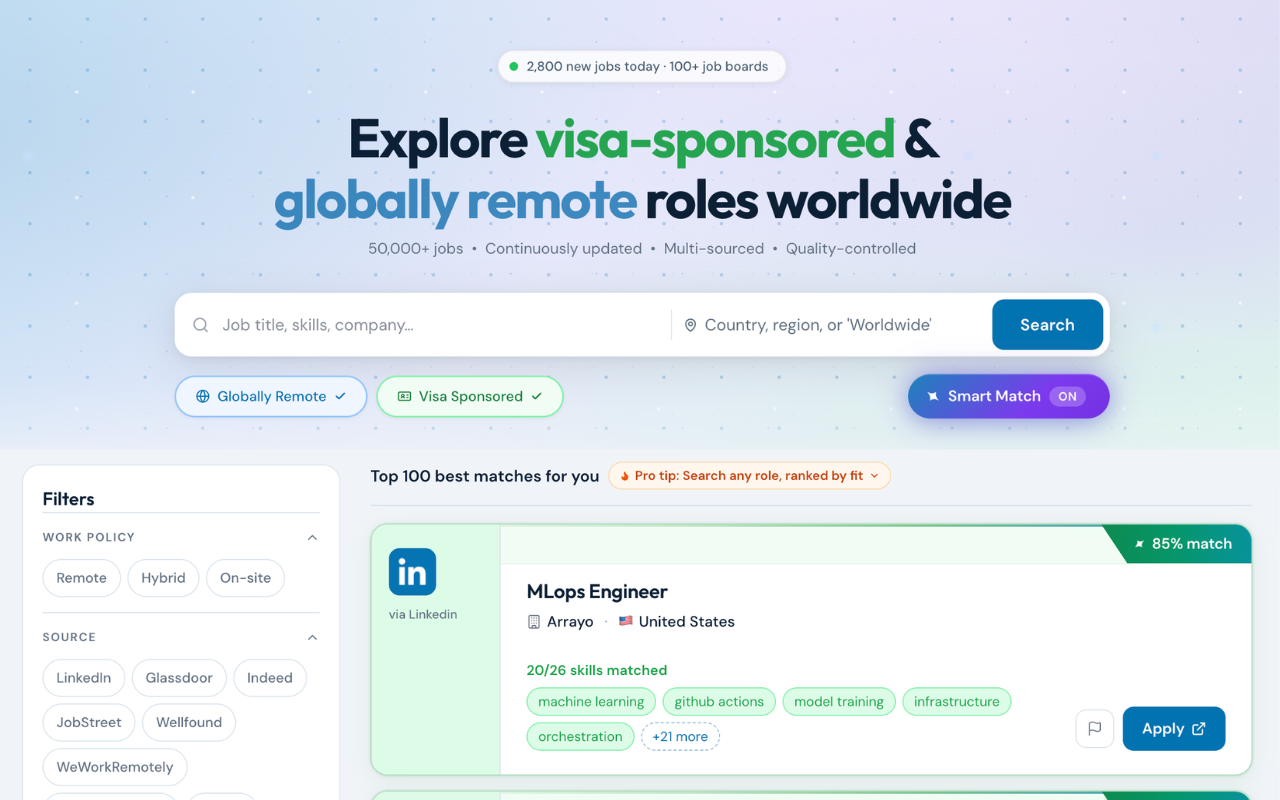
Unemployment is not only a shortage of income. It also creates pressure, uncertainty, and a daily sense that every missed opportunity matters. Yet the biggest problem is often not the lack of vacancies. The real difficulty lies in identifying suitable opportunities among countless poor matches. A well-designed Job Search on web can reduce this noise by helping candidates focus on positions that reflect their experience, location, work eligibility, and career direction.
Why More Job Listings Can Make Searching Harder
Traditional job boards remain useful because they offer a wide picture of the employment market. They show which industries are hiring, what skills employers request, and where new roles are appearing. However, a large database does not automatically create a better search. Applicants may review many vacancies before finding that the pay is unsuitable, the experience requirements are too high, or the remote arrangement is restricted to a particular country.
This problem carries a hidden cost. Time spent filtering irrelevant jobs is time that cannot be used to improve a resume, research an employer, or prepare a focused application. Employment data from organizations such as the International Labour Organization also highlights that job opportunities should be viewed within broader economic and workforce conditions, rather than simply counted as available vacancies.
Why Relevance Should Guide Every Job Search
A practical job-search strategy should begin by asking whether the applicant can realistically perform the work and meet the hiring conditions. Job titles alone are unreliable because similar roles may use different names, while identical titles can involve very different responsibilities. Resume-based matching helps candidates identify skill alignment before they invest effort in an application.
This does not mean automated matching should make the final decision. A match score cannot fully account for every career ambition, transferable ability, or personal situation. Its greatest value is helping candidates decide which opportunities deserve attention first. The candidate still needs to read the job description, confirm employment conditions, and decide whether the opportunity supports a sensible next step.
Better Applications Usually Require Fewer Distractions
Mass applying can create activity without meaningful progress. When candidates use the same resume for every employer, the application often fails to show why they suit a specific role. A smaller list of relevant roles allows more time for tailoring, company research, and clearer communication of useful experience.
Job seekers can still use major boards to observe hiring trends and explore unfamiliar industries. Information from the OECD employment portal can also offer wider insight into employment patterns and labour-market changes. The stronger approach is to combine wide market visibility with careful matching, then apply where skills, eligibility, and employer needs genuinely connect.